More Than a Hackathon. A Launchpad for Quantum Builders.
Quantum Hackathon for Social Good QC4SG 2026 marks the second SEA Quantathon and the first edition organized in Vietnam.
More than a competition, QC4SG is designed as a launchpad for future quantum builders and deep technology startups.
The program integrates Quantum Computing (QC), Artificial Intelligence (AI), and Machine Learning (ML) to develop innovative solutions aligned with the United Nations Sustainable Development Goals.
By connecting advanced research with entrepreneurial execution, QC4SG bridges science, technology development, and real world application within a collaborative innovation ecosystem.
🔷 Journey: From Idea to Startup
QC4SG aims to foster innovation across the ASEAN+ region.
Our mission is to empower participants to apply Quantum Computing, Artificial Intelligence (AI), Data Science, and advanced technologies to solve real world problems for social impact.
The program is open to participants from different backgrounds. Even if you do not have prior knowledge in quantum computing, you are welcome to join. A structured online training phase is included to help participants build essential foundations before the onsite bootcamp.
🔷 Entrepreneurship Track
Through the Entrepreneurship Track, teams experience the core stages of the startup cycle:
- Customer discovery to identify real community needs
- Idea development and solution validation
- Build and iterate a working prototype
- Application design and refinement
- Pitch presentation to technical and industry experts
The objective is not only to develop a prototype, but to evaluate the feasibility and long term potential of each solution.
🔷 Technical Track
Participants also strengthen their deeptech capabilities through the Technical Track, which includes:
- Quantum Information and Communication, Security and Privacy
- Quantum Error Correction and Control
- Quantum Machine Learning (QML) and NISQ Applications
- Quantum Utility, Advantage, and Fault Tolerant Quantum Computing (FTQC)
- Artificial Intelligence (AI) & Traditional Machine Learning
🔷 Mentorship, Collaboration, and Impact
As a participant, you will gain access to:
- Leading industry and academic experts who mentor teams throughout the program
- A collaborative, interdisciplinary team environment that fosters growth and innovation
Participants will strengthen best practices in QC (Quantum Computing), software development, and applied research, while developing tangible technology solutions aligned with global impact goals.
QC4SG is more than a competition. It is the beginning of a long term network connecting researchers, builders, mentors, and potential partners across the ASEAN+ region and beyond.
The program aims to foster international collaboration, support deeptech startups, and contribute to breakthrough research in QC, AI (Artificial Intelligence), and ML (Machine Learning).
🔷 Eligibility
This program is open to students, researchers, entrepreneurs, and early stage startups with an interest in QC, AI, ML, and emerging technologies.
Applicants from all countries are welcome. Priority consideration is given to ASEAN+ participants.
Participation is free of charge. Travel and local support may be provided for selected teams, subject to availability.
🔷 Registration
- Future Builders / Startups:
Individuals including students, researchers, and entrepreneurs who will form teams to design and develop innovative solutions addressing the UN SDGs using QC, AI, and ML. Interdisciplinary teams combining technical and entrepreneurial skills are encouraged.
- Mentors (Academic, Technical, Business):
Experts in QC, AI, ML, SDGs, or business strategy who wish to guide and advise participating teams throughout the program.
For mentor registration, please contact: research@vnquantum.org
🔷 Process
- Registration on the website finished by 31 March 2026
- Online participants are announced by 30 April 2026
- Online training courses give in May & June 2026
- Onsite participants are announced by 30 May 2026
- Onsite event organized in Gia Lai from 24 to 28 July 2026
- Demoday occurs on 28 July 2026
- Post-hackathon mentorship monthly till December 2026
🔷 Program Structure
The program consists of an online preparation phase followed by an onsite bootcamp in Vietnam.
1. Online QWORLD Training Phase
Online QC training will be delivered by QWORLD lecturer, Jibran Rashid. The course will be self-paced and will take place from 20:00 - 21:30, Vietnam time, May 15, 2026 to May 24, 2026. To participate in the face to face bootcamp, teams are required to complete:
Selected applicants will be required to access the QWorld platform starting in early May 2026.
The course will be self-paced and will take place from 20:00 - 21:30, Vietnam time, May 15, 2026 to May 24, 2026. You will receive a certification upon completion of this online course.
May 15 - Introduction to Quantum Computing
May 16 - Introduction to Classical Systems
May 17 - Introduction to Quantum Systems
May 18 - Quantum Operations & Qiskit Programming
May 19 - Grover’s Algorithm
May 20 - Grover’s Algorithm for Max-Cut Problem
May 21 - Variational Algorithms & Adiabatic Quantum Computation
May 21 - Quandela's Photonic Quantum Computing (Partner training)
May 22 - Quantum Approximate Optimization Algorithms QAOA
May 23 - QUBO and Ising Formulations
May 24 - Binary Quadratic Model
May 28 - 9-12am. CET - Thursday - Introduction of QUDORA and its Qamelion
Quandela's Photonic Quantum Computing
Tentative: Thursday 21/ May (or 28/May) between 9:00 and 12:00 Paris time.
Quandela's Photonic Quantum Computing
Quantum Machine Learning
Online materials about photonic quantum computing and quantum machine learning available at https://training.quandela.com/. Please create a free account to access all the materials. The learning path too start with is called “A Photonic Quantum Computer”.
Quapp Platform
Please find attached the following tutorial videos for using Quapp:
-
- ProjectSetup & Management
These videos provide an overview of the basic features and guidance on how to set up and manage projects within Quapp.
2. Online Tutorial Phase
Online QC training will be delivered by hackathon partners. The tutorial will take place from May to June 2026. To participate in the face to face bootcamp, teams are required to complete:
- Online tutorials provided by quantum hardware providers
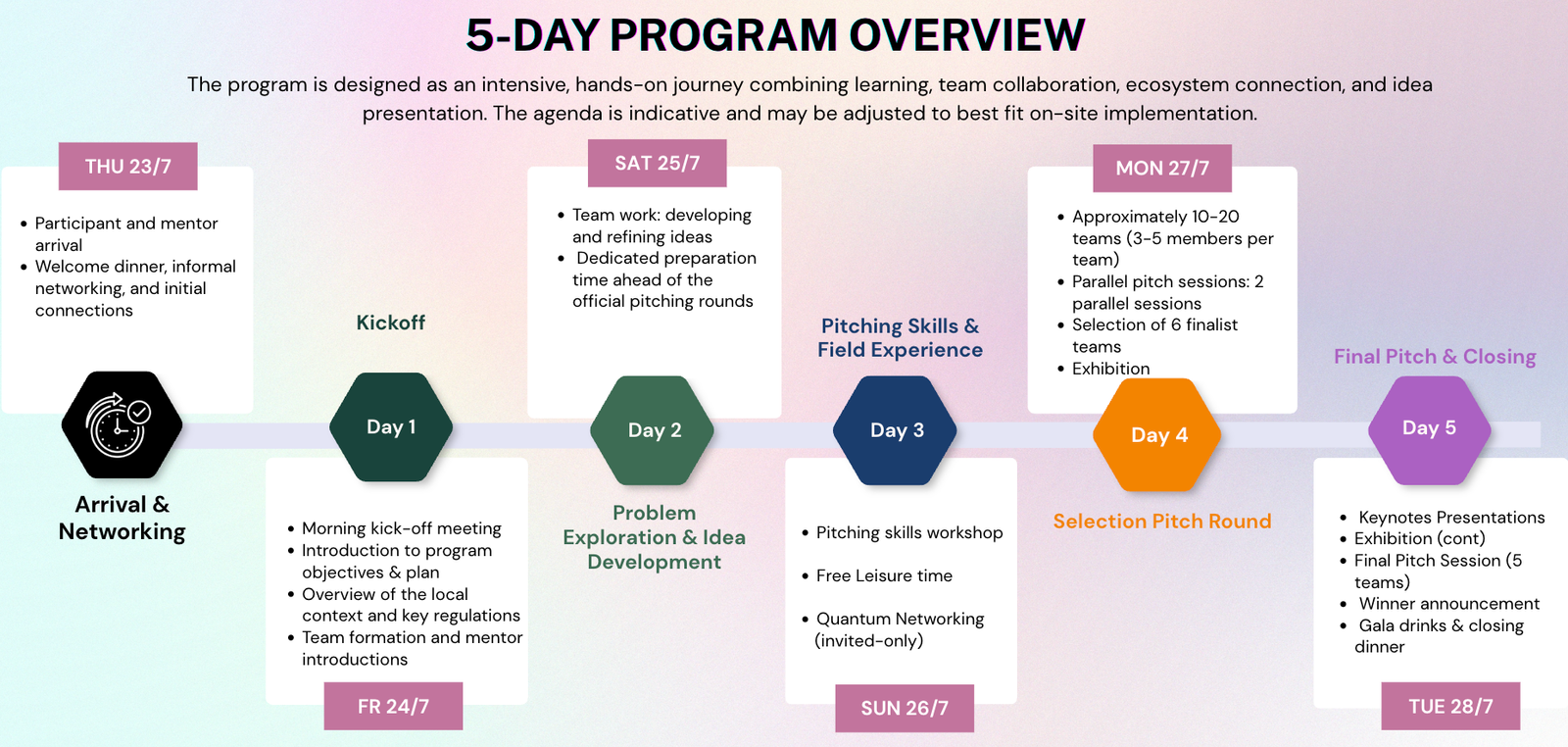
3. Face to Face Bootcamp in Vietnam
(tentative plan below)
🔷 Startup Ideas:
Teams are welcome to come up with their own ideas that can solve big social problems with the aids of quantum technology. Please note that the proposed algorithms are only for your information, you can choose any solution you like. Otherwise, the following ideas can be used:
1. Quality management of water and soil
Water and soil in developing countries face mounting pressure from heavy metals, pesticides, salinity intrusion, and industrial effluent, yet monitoring is fragmented, sensor budgets are limited, and contamination data rarely reaches decision-makers in time. Build a system that ingests data from at least two sources (government open data, IoT sensors, satellite imagery, citizen reports), processes it through a classical pipeline with anomaly detection and contamination risk scoring, and surfaces insights via a dashboard or alerting layer for a defined user group such as farmers or local authorities. The quantum component should address one of two combinatorial cores: optimal sensor placement — given a fixed budget of N sensors across a river basin or agricultural region, maximize contamination detection coverage (a max-coverage / facility-location QUBO suited to QAOA or quantum annealing) — or multi-source data fusion — using quantum machine learning (variational classifiers, quantum kernels) to classify contamination patterns from heterogeneous, noisy inputs where classical baselines plateau. Teams should benchmark the quantum approach against a strong classical baseline (greedy algorithms, OR-Tools, or classical ML) on the same dataset, and be honest about where quantum adds value versus where it does not. Suggested deliverables: working prototype with classical baseline + quantum module, short technical write-up including the benchmark comparison, and a pitch judged on technical execution, defensibility of the quantum-classical split, real-world deployability, and clarity of the user value proposition.
2. Real-time digital agriculture mapping and logistics integration
South East Asia's agricultural exports — coffee, rubber, cashew, pepper, timber — face tightening compliance demands from EUDR, GlobalGAP, Rainforest Alliance, and ESG frameworks, while smallholders and cooperatives lack the digital infrastructure to prove provenance and move goods efficiently to port. Build a system that maps growing areas with geospatial precision, tracks production and shipments through a classical data layer (satellite imagery, GPS-tagged field data, tamper-evident records), and supports at least one compliance standard end-to-end for a defined user such as a cooperative manager or exporter. The quantum component should address one of two combinatorial cores: cold-chain and collection-route optimization — routing vehicles across hundreds of cooperative collection points under EUDR traceability, time-window, and capacity constraints (a vehicle routing QUBO suited to QAOA or quantum annealing) — or quantum machine learning for deforestation and land-use classification on Sentinel-2 imagery, where quantum kernels or variational classifiers are benchmarked against classical CNNs on the same tiles. Teams should ship a working classical baseline first, then show where the quantum module is invoked, what problem size it handles, and how it compares to OR-Tools or a tuned classical ML model on identical inputs. Deliverables: working prototype with classical baseline + quantum module, short technical write-up including the benchmark and an honest scaling discussion (NISQ-era limits, when this would beat classical at production scale), and a pitch judged on standards compliance, quantum-classical integration, deployability, and value to producers.
3. Distributed Quantum Machine Learning with Photonic QCNNs
Quantum machine learning is currently limited by the size and scalability of available quantum hardware. One promising approach is distributed quantum computing, where several smaller quantum processors cooperate through classical communication instead of relying on a single large quantum processor.
In this challenge, teams will investigate whether distributed photonic quantum machine learning architectures can reproduce the performance of larger monolithic systems using Quandela’s photonic quantum computing framework MerLin.
Participants will build upon an existing photonic Quantum Convolutional Neural Network (QCNN) implementation already reproduced in MerLin:
- Photonic QCNN reproduction:
The scientific inspiration for the challenge comes from the paper:
- “Distributed quantum machine learning via classical communication”
The paper demonstrates that, for a specific quantum machine learning task, two smaller quantum processors connected through classical feed-forward communication can perform comparably to one larger processor.
The goal of the challenge is not to demonstrate quantum advantage. The focus is instead on:
- scalable photonic quantum ML architectures,
- distributed quantum workflows,
- adaptive classical-quantum hybrid protocols,
- realistic hardware-aware implementation strategies.
4. Climate disaster prediction, risk assessment, and resilience planning
Vietnam faces an intensifying cycle of typhoons, floods, droughts, and landslides, yet current forecasting models are often too slow or coarse-grained to guide evacuation, infrastructure decisions, or local mitigation in time. Build a classical pipeline that ingests meteorological, hydrological, and geospatial data (VNMHA feeds, satellite imagery, terrain models) to produce risk maps and early-warning signals for a defined user such as a provincial disaster authority or insurer. The quantum component should target one combinatorial core: optimal placement of warning infrastructure (sensors, sirens, evacuation hubs) under coverage and budget constraints — a QUBO suited to QAOA or quantum annealing — or quantum machine learning applied to multi-variable weather pattern classification where classical models plateau on sparse extreme-event data. Teams must benchmark against a credible classical baseline (rule-based thresholds, gradient-boosted trees, or numerical weather models) on the same inputs, and be explicit about which subproblem the quantum module addresses. Deliverables: working prototype with classical baseline plus quantum module, technical write-up including benchmark, and a 5-minute pitch judged on technical execution, real-world deployability in a Vietnamese province, and clarity of value for affected communities.
5. Energy grid optimization, renewable integration, and efficiency
Vietnam's grid is straining under rapid solar and wind capacity additions, with transmission losses, instability, and demand-supply mismatch driving up cost and curtailment. Build a classical simulation of a representative grid segment — generation mix, storage, transmission constraints, demand profile — and produce a dispatch and balancing engine that surfaces decisions for a defined user such as EVN, a microgrid operator, or an industrial off-taker. The quantum component should address one combinatorial core: unit commitment and dispatch under uncertainty (which generators run, when, and at what level given fluctuating renewables) — a QUBO well-suited to QAOA or quantum annealing — or portfolio optimization of storage and demand-response assets under joint cost and reliability constraints. Teams should benchmark against MILP solvers or OR-Tools on identical inputs, report runtime and solution quality fairly, and discuss the problem size at which quantum methods would plausibly compete. Deliverables: prototype with classical baseline plus quantum module, write-up with benchmark and honest scaling discussion, and a 5-minute pitch judged on technical rigor, integration of renewables, and deployment realism in the Vietnamese energy context.
6. Cybersecurity and secure digital infrastructure
The cryptographic foundations of Vietnamese banks, telecoms, government services, and critical infrastructure are vulnerable to future quantum attacks, while "harvest now, decrypt later" threats mean sensitive data captured today can be decrypted in a decade. Build a tool that scans a representative target — an enterprise codebase, cloud configuration, TLS endpoint inventory, or document signing workflow — and produces a quantum-risk inventory, migration roadmap, and prioritized action list for a defined user such as a CISO, fintech security team, or government IT auditor. The quantum component is the post-quantum cryptography migration itself: integrate NIST-standardized PQC primitives (Kyber, Dilithium) via liboqs or OpenSSL provider, demonstrate hybrid classical-PQC handshakes, and quantify performance overhead. Optionally include a quantum random number generator demo for high-entropy key material. Teams should be explicit about which components are genuinely quantum-vulnerable, which are not, and what a realistic 1- to 3-year migration looks like for a Vietnamese organization with limited budget. Deliverables: working scanner and migration toolkit, write-up with sample audit report, and a 5-minute pitch judged on technical correctness of the PQC integration, migration realism, and value to Vietnamese organizations facing long-term confidentiality requirements.
7. Food security: crop yield optimization, pest and disease control, supply chain loss reduction
Vietnamese agriculture loses up to 40% of production post-harvest while facing climate stress, pest outbreaks, and rising input costs — yet smallholders rarely receive crop-specific, locally calibrated guidance. Build a classical decision-support system that ingests farm-level data (soil, weather, satellite NDVI, pest reports) and produces planting, input, and harvest recommendations for a defined user such as a cooperative manager, extension officer, or aggregator. The quantum component should address one combinatorial core: crop allocation and rotation optimization across farms and seasons under water, salinity, market, and risk constraints (a multi-objective QUBO suited to quantum annealing or QAOA) — or quantum machine learning for early pest and disease detection from leaf imagery, where quantum kernels are benchmarked against classical CNNs on the same dataset. Teams must ship the classical baseline first, then show where the quantum module is invoked, and benchmark against OR-Tools or a tuned classical ML model on identical inputs. Deliverables: prototype with classical baseline plus quantum module, write-up with benchmark and honest discussion of NISQ-era limits, and a 5-minute pitch judged on agricultural realism, technical execution, and clarity of value for Vietnamese smallholders.
8. Sustainable transportation and smart urban mobility
Vietnamese cities — Hanoi, Ho Chi Minh City, Da Nang — face severe congestion, emissions, inefficient public transit, and rising logistics cost, with traffic patterns that defy static signal timing and routing. Build a classical traffic simulation calibrated to a real corridor or intersection cluster, with the ability to evaluate signal schedules, fleet routing, or transit allocation against measurable outcomes (average wait time, emissions, throughput) for a defined user such as a city traffic authority or logistics operator. The quantum component should target one combinatorial core: traffic signal optimization across a small network of coupled intersections — a QUBO suited to QAOA or quantum annealing — or vehicle routing and fleet assignment for delivery, ride-share, or public transit under time-window and capacity constraints. Teams must benchmark against fixed-time signal plans, SUMO/Aimsun rule-based controllers, or OR-Tools VRP on the same inputs, and be candid about which problem sizes the quantum module can handle today versus at scale. Deliverables: prototype with simulation, baseline, and quantum module, write-up with benchmark, and a 5-minute pitch judged on technical execution, urban realism, and value to a Vietnamese city.
9. Water resource allocation, usage efficiency, and transboundary management
Vietnam shares major river systems (Mekong, Red River) with upstream neighbors, faces growing competition between agriculture, urban, and industrial water users, and lacks the coordination tools to allocate fairly under scarcity. Build a classical water balance model for a representative basin — inflows, reservoirs, demand nodes, environmental flows — with the ability to evaluate allocation policies against equity, efficiency, and reliability metrics for a defined user such as a basin authority, irrigation district, or hydropower operator. The quantum component should address one combinatorial core: multi-period reservoir release and allocation scheduling under stochastic inflows and competing demands (a QUBO suited to QAOA or quantum annealing) — or optimal sensor and monitoring station placement across a transboundary network to maximize information value under budget constraints. Teams must benchmark against linear programming or rule-curve baselines on the same data, and discuss honestly how the quantum formulation scales as the number of decision periods and users grows. Deliverables: prototype with classical baseline plus quantum module, write-up with benchmark, and a 5-minute pitch judged on hydrological soundness, stakeholder realism, and value to Vietnamese water governance.
10. Healthcare: drug discovery, disease diagnosis, and public health response
Vietnam faces a dual burden of infectious disease (dengue, tuberculosis, emerging outbreaks) and rising non-communicable disease, with limited domestic drug discovery capacity and uneven diagnostic infrastructure. Build a classical workflow targeting one of three application areas: molecular simulation for a small drug candidate against a Vietnam-relevant target (dengue NS3 protease, M. tuberculosis enzymes), diagnostic imaging classification for a condition with high regional prevalence, or outbreak modeling and resource allocation during a simulated epidemic. The quantum component should match the application: VQE or quantum-classical hybrid simulation for ground-state energy of a small molecule fragment (H₂, LiH, or a small ligand) with honest comparison to classical reference methods; quantum machine learning (variational classifiers, quantum kernels) for diagnostic image classification benchmarked against a tuned CNN on the same dataset; or quantum-inspired optimization for hospital resource and vaccine distribution under outbreak constraints. Teams must benchmark fairly and be explicit about which parts of the workflow are quantum versus classical, and at what scale quantum methods would plausibly contribute beyond demonstration. Deliverables: prototype with classical baseline plus quantum module, write-up with benchmark and honest scaling discussion, and a 5-minute pitch judged on medical relevance, technical correctness, and pathway to a Vietnamese clinical or public health user.
11. Supply chain resilience, trade facilitation, and cross-border logistics
Vietnam's export-driven economy depends on complex supply chains across ports, customs, and trading partners, yet disruptions, delays, and lack of end-to-end visibility erode margins and competitiveness. Build a classical supply chain simulator covering a representative trade flow — supplier network, inventory nodes, port and customs touchpoints, demand variability — with the ability to evaluate routing, inventory, and contingency policies against cost, lead time, and risk metrics for a defined user such as an exporter, 3PL, or customs authority. The quantum component should target one combinatorial core: multi-echelon inventory and network design under uncertainty (a QUBO suited to QAOA or quantum annealing) — or route and mode selection under disruption scenarios balancing cost, transit time, and resilience. Teams must benchmark against MILP or simulation-optimization baselines on the same inputs, and discuss honestly the gap between toy instances and production-scale problems. Deliverables: prototype with classical baseline plus quantum module, write-up with benchmark, and a 5-minute pitch judged on supply chain realism, technical execution, and value to Vietnamese trade-dependent businesses.
12. Environmental protection: pollution monitoring, carbon accounting, and emission reduction
Vietnam faces severe air and water pollution in industrial corridors, growing pressure on carbon accounting from export markets (EU CBAM), and the need for verifiable emission inventories at facility and supply chain levels. Build a classical monitoring and accounting pipeline that ingests sensor data, satellite observations (Sentinel-5P for NO₂, methane), and reported emissions, producing facility-level or regional inventories with uncertainty quantification for a defined user such as an industrial operator, environmental authority, or export compliance manager. The quantum component should target one combinatorial core: optimal monitoring sensor placement across industrial zones, watersheds, or air sheds to maximize detection coverage under budget constraints (a QUBO suited to QAOA or quantum annealing) — or quantum machine learning for identifying emission sources from hyperspectral or multi-source data, benchmarked against classical methods. Teams must ship the classical pipeline first, then show where the quantum module adds value, with honest comparison against established baselines. Deliverables: prototype with classical baseline plus quantum module, write-up with benchmark, and a 5-minute pitch judged on environmental rigor, technical execution, and pathway to a Vietnamese regulator, exporter, or community user.
13. Natural resource management: forestry, minerals, and biodiversity conservation
Vietnam's forests, mineral deposits, and biodiversity face pressure from illegal logging, over-extraction, and habitat fragmentation, with monitoring and enforcement constrained by limited resources and incomplete inventories. Build a classical resource intelligence pipeline that combines satellite imagery (deforestation alerts from GFW, Sentinel-2 time series), ground reports, and concession records to produce monitoring outputs and extraction plans for a defined user such as a forest management board, conservation NGO, or mining regulator. The quantum component should target one combinatorial core: optimal patrol routing and ranger deployment across protected areas under coverage, distance, and risk constraints (a vehicle routing / coverage QUBO suited to QAOA or quantum annealing) — or quantum machine learning for land-use change detection from satellite imagery, benchmarked against classical CNNs on identical tiles. Teams must benchmark against classical methods (OR-Tools for routing, tuned CNNs for imagery) on the same data, and discuss honestly when the quantum approach plausibly competes. Deliverables: prototype with classical baseline plus quantum module, write-up with benchmark, and a 5-minute pitch judged on conservation rigor, technical execution, and value to Vietnamese resource management authorities.
🔷 Beyond the Hackathon
QC4SG is not designed as a standalone competition.
Selected teams with strong technical and venture potential may continue beyond the hackathon phase through structured advisory support and opportunities to pitch for funding.
Eligible startups may receive:
- Guidance on company formation in Vietnam
- Post program monthly advisory meetings
- Continued mentorship within the QC4SG ecosystem
- Possible pre-seed or seed funding opportunities
The objective is to support the transition from validated ideas toward venture development.
🔷 Ready to Build with Quantum
If you are ready to explore how QC, AI, and ML can address real world challenges and evolve into scalable solutions, we welcome your participation.
Contact: research@vnquantum.org
🔷 Resources for building startup:
Participants are encouraged to explore foundational materials in entrepreneurship and venture building, including:
🔷 Visa and Travel:
Visa formalities
Important: Please make sure that your passport validity is at least six month after your return date (this may be contradictory with other rules, but this was imposed recently - last year - to a participant of another conference).
You should apply for a visa at least 10 days in advance to ensure it is issued on time, even though it usually takes only 3 working days to process. However, the visa issuance system in Vietnam can sometimes be overloaded due to conferences held during peak periods in the country.
Visa exemptions
All participants who do not have a Vietnamese passport require a visa to enter Viet Nam. Certain countries listed below are subject to a visa exemption for a select number of days (subject to change by the government):
- Citizens from Chile and Panama for visits of 90 days at maximum
- Citizens of Cambodia, Indonesia, Kyrgyzstan, Laos, Malaysia, Philippines, Singapore and Thailand for visits of 30 days at maximum.
- Citizens of Russia for visits of 15 days at maximum.
- Citizens of Belarus, Denmark, Finland, France, Germany, Italy, Japan, Norway, South Korea, Spain, Sweden, and the United Kingdom for visits of 45 days at maximum.
- Citizens from Brunei and Myanmar for visits of 14 days at maximum.
Diplomatic passports
Participants with diplomatic passports from certain countries listed below are also subject to a visa exemption for a select number of days (subject to change by the government):
- Holders of diplomatic passports from Algeria, Armenia, Bolivia, Botswana, Czech Republic, Egypt, Hungary, India, Iraq, Israel, Mexico, Moldova, Morocco, Peru, Seychelles, Switzerland, Ukraine, United Arab Emirates and Uruguay for visits of 90 days at maximum.
- Holders of diplomatic passports from China and Romania for visits of 30 days at maximum.
Participants should ensure their passport is valid for at least 6 months following their date of arrival in Viet Nam and includes at least two blank pages.
E-Visas
From 2025, citizens from all countries can apply for 90 days E-Visas via the following link:
https://evisa.gov.vn/
Processing time is between 3-4 working days and the visa costs US$ 25.
The E-visa requirements include:
- A passport with six months’ validity
- A photo in .jpg format of the full passport data page
- A passport photo in .jpg format (4x6, white background, without glasses)
- A valid international credit or debit card
- An email address for support purposes
- A temporary address within Vietnam
- The dates of entry and exit into Viet Nam and the entry and exit points/airports
All participants are advised to use the official website to obtain an E-Visa for Vietnam: https://evisa.gov.vn/. When applying for the visa, please select the option Working or Business in the Purpose of entry box. If this option is not available, select "other" and specify "conference/summit."
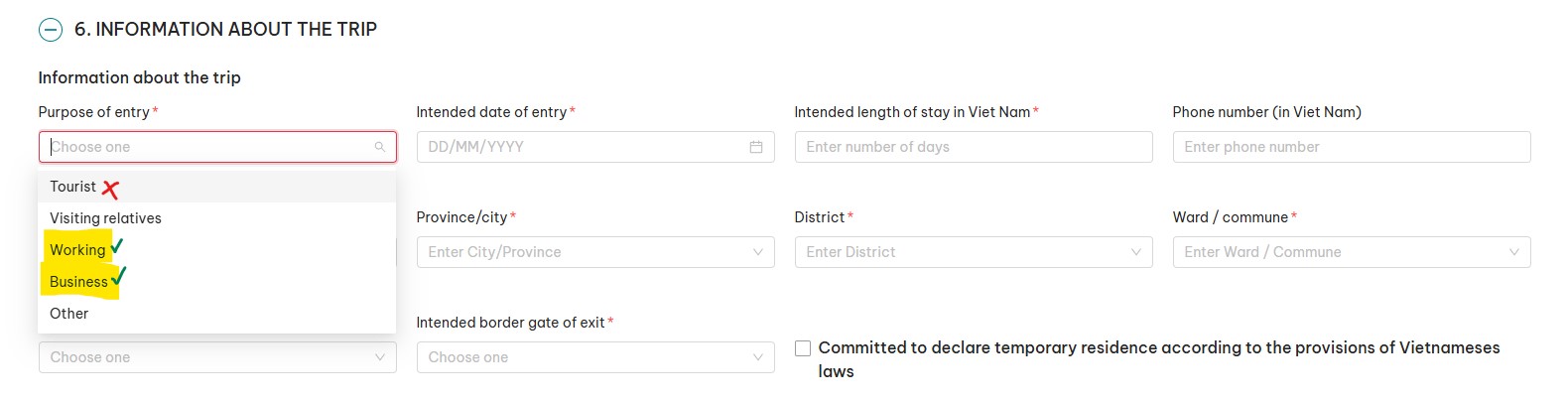
In compliance with the regulations set by the Government of Vietnam, delegates attending the conference (excluding accompanying persons) are requested to not select 'Tourist' as the purpose of entry. Choosing 'Work' or 'Business' for your visa purpose will not affect your travel plans in Vietnam before or after the conference.
Participants are responsible for ensuring the correct purpose is selected, as inaccuracies may affect their stay and activities in Vietnam.
After 3 days, participants can check their visa status and download the visa which they will need to bring to the airport to enter Viet Nam at the following link:https://evisa.xuatnhapcanh.gov.vn/tra-cuu-thi-thuc
If participants cannot obtain an E-Visa, they are kindly requested to contact us at rencontres.vietnam@gmail.com
There are four main international airports in Vietnam : Hanoi (Noi Bai airport : HAN) and Ho Chi Minh (Tan Son Nhut airport : SGN), Da Nang Airport (DAD), Cam Ranh International Airport (CXR).
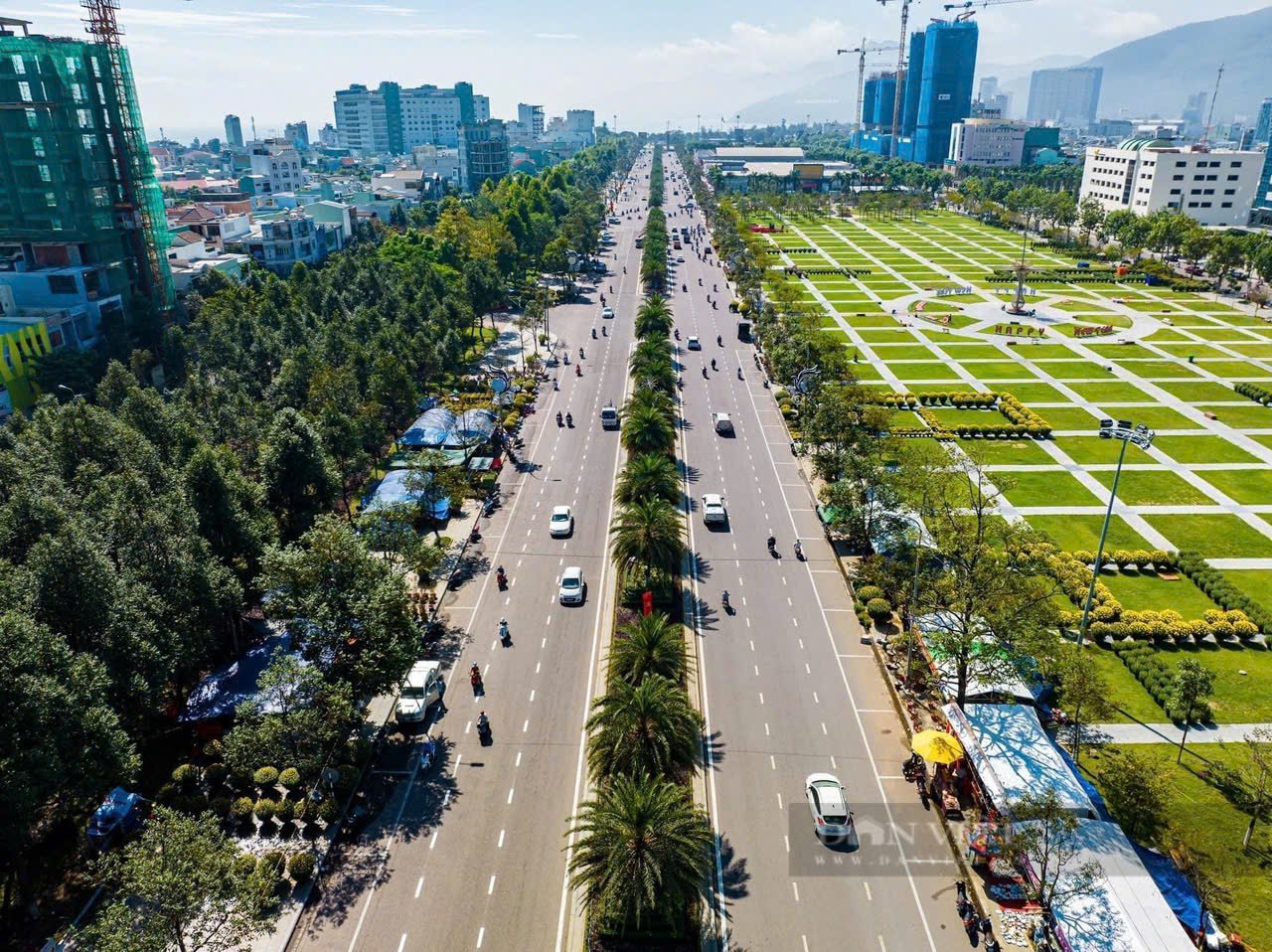
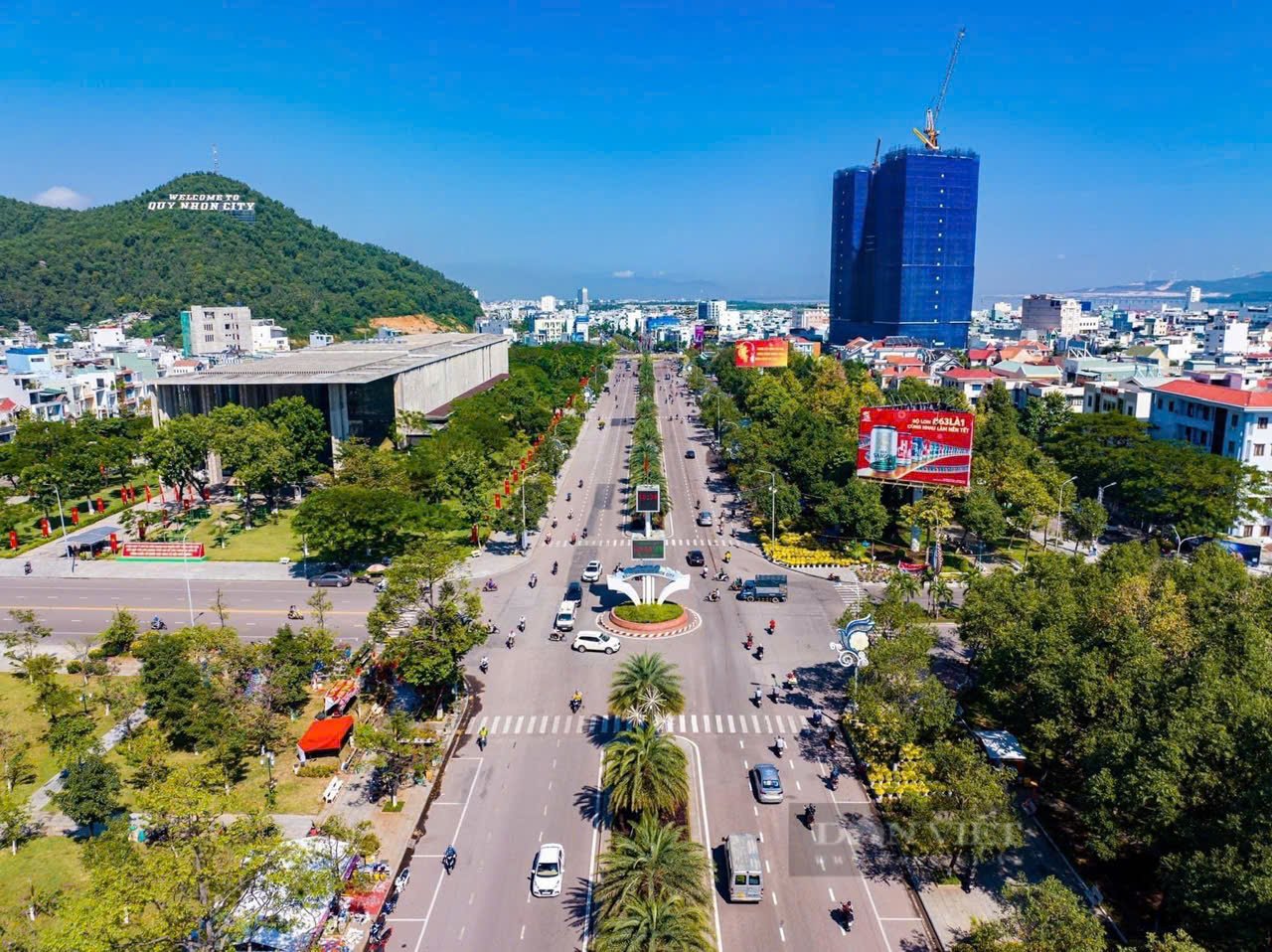
From these international airport, to take a flight to Quy Nhon, Binh Dinh, you need to find a ticket to Phu Cat airport (UIH).
As there more flights from Ho Chi Minh to Quy nhon, it is more convenient to fly from foreign countries to Ho Chi Minh than to Hanoi.
Once you arrive at Phu Cat airport (UIH), the organizer will pick you up at the airport, and take you to your hotels.
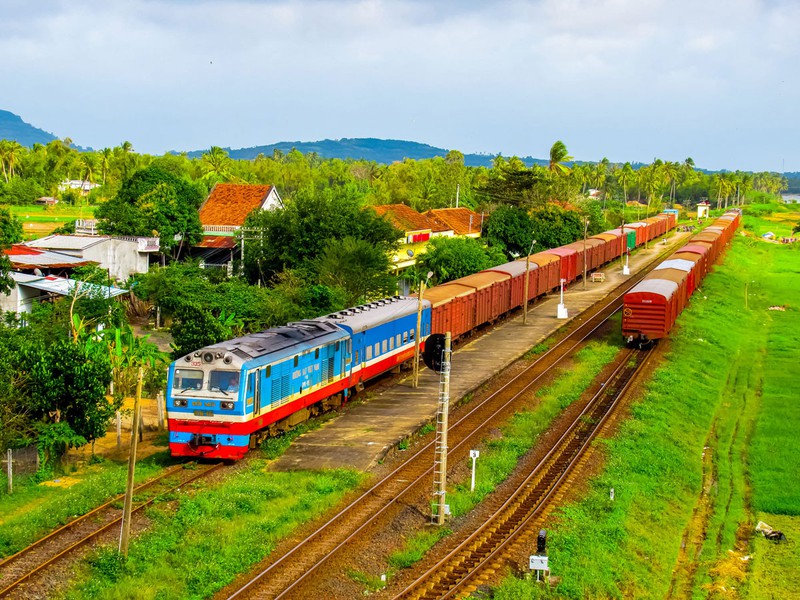
Alternatively, you can take trains or sleeper coach from Hanoi, Ho Chi Minh City, Da Nang, Nha Trang, Hue, etc..
Train can be booked here.
Sleeper coach can be booked here.

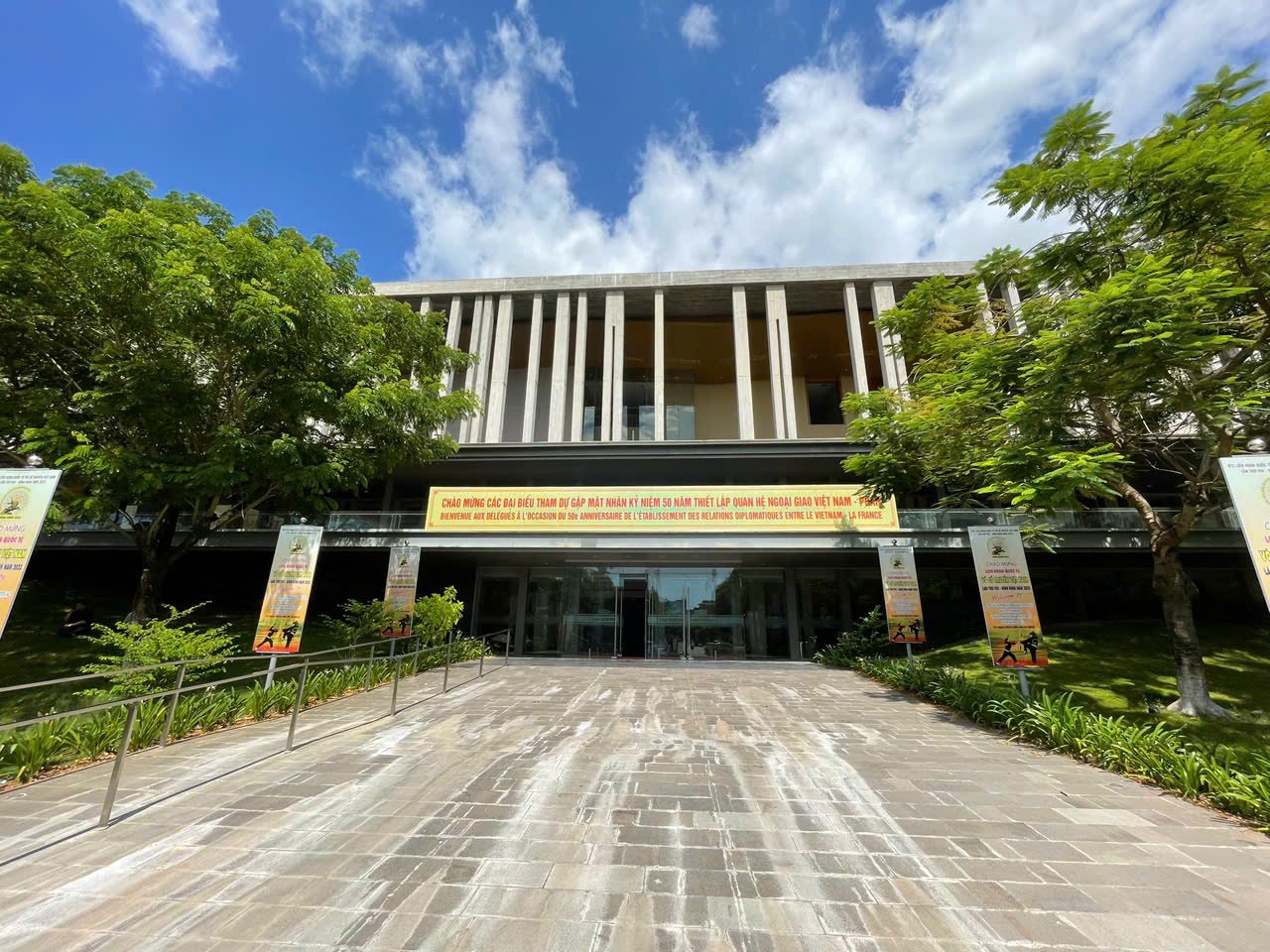
🔷 Venues
ICISE


GIA LAI CONVENTION CENTER (TRUNG TÂM HỘI NGHỊ TỈNH)


 English
 Tiếng Việt